Dubai tax residency is something many people are interested in.
Most people now about the lack of taxes in the Dubai. However, many don’t seem to understand the exact requirements and details.
In this article, we’ll discuss everything in detail so you have a good understanding to make an informed decisions.
As Dubai is part of the United Arab Emirates, most of the things we discuss here will also apply in the other emirates. Yet, as most people prefer Dubai we’ll put our focus there.
Dubai Tax Residency at a Glance
- Dubai doesn’t levy personal income tax
- Most people also don’t have to pay social contributions
- Corporate tax of 9% on profit above AED 375.000
- Various options to obtain a residency permit
- You can only prove tax residency in Dubai by applying for a tax certificate

Benefits of Being a Tax Resident in Dubai
Dubai tax residency comes with multiple benefits from a tax point of view. That’s also the reason so many digital nomads are interested in it.
Let’s have a closer look what this looks like.
No Personal Income Tax
One of the reasons Dubai became famous and popular is because it’s lack of personal income tax.
That means that any income you receive as an individual remains tax free.
However, different rules apply if you run a freelance business. In this case the rules for corporate income tax will apply to you (see below).
Furthermore, if your receive income from abroad you do want to make sure that your income isn’t taxed in the country of origin.
As there is no personal income tax, you also don’t have to file an income tax return. More about this later.
Social Contributions
Only UAE and Gulf Cooperation Council nationals have to pay social contributions. If you are from any other country, you don’t pay social contributions.
Since 2023 a mandatory unemployment insurance applies. If you make less than AED 16.000 per month you pay AED 5 per month and if you make more the premium is AED 10.
Furthermore, certain exemptions can apply.
Low Corporate Income Tax
In the past Dubai used to be completely tax free.
However, in 2023 the UAE introduced a corporate income tax of 9% if the taxable income of your company exceeds AED 375.000.
There are some exemptions for certain industries but they mostly won’t apply to digital nomads.
Yet, you could make sure to limit your tax burden by taking out a decent wage from your company which will lower its taxable income.
However, this wage should always be at market level and not superficially high.
How to Get Tax Residency in Dubai
If you want to get your tax residency in Dubai you’ll have to take a few steps.
Obtain Residency Permit
The first step is to obtain a residency permit in order to become a legal resident of Dubai. There are various ways to obtain one.
If you work for a company in the UAE, you can apply for a visa sponsored by your employer. This visa will be valid for one or two years.
Yet, most digital nomads don’t necessarily work for a UAE company.
If you work for a foreign company, there is the remote work visa. The most important condition of this visa is that you have a minimum income of USD 3.500 per month.
You can learn more about the Dubai Digital Nomad Visa in this article.
Many people who want to settle in the Dubai opt to incorporate their own company there. In that way, you can sponsor your own visa with your own company and benefit from the low corporate tax rate.
If you have some spare money to invest, you can also obtain a visa based on an investment in real estate.
The thresholds differs for each emirate. For Dubai you have the option to invest AED 750.000 to get a two year visa or AED 2.000.000 for a ten year visa.
Meet Criteria Tax Residency
In order to qualify as a tax resident, you’ll have to meet the criteria for tax residency.
There are multiple ways you can qualify as a tax resident:
- Have your primary residence and centre of your financial and personal interests in the UAE;
- Spend at least 90 days in the UAE during twelve consecutive months while being a UAE or GCC national or holding a residence permit and while having a permanent residence in the UAE or carrying on employment/business there;
- Spend at least 183 days in the UAE during twelve consecutive months.
The third and last option is probably the least attractive to digital nomads as this makes you stay in the country for at least six months every year.
Yet, if you want to apply for an international tax residency certificate spending 183 days in the country is your only option.
With the international tax residency certificate, you will be able to avoid double taxation in other countries.
Furthermore, we want to clarify that if you hear people saying you only need to visit Dubai once every six months to keep your tax residency that this is wrong.
They are merely referring to the fact that for most visas, you have to visit the UAE every six months to keep your residency active. If you don’t, your visa will expire and you’ll have to apply again.
For this reason, it’s not as easy to obtain personal tax residence in Dubai as some people think or pretend.
Apply for Tax Certificate
The final step to prove your tax residency in the United Arab Emirates is to obtain a tax certificate.
This is your only option to get proof of UAE tax residency as you don’t have file a personal tax return because of the lack of personal income tax.
In order to obtain an international tax certificate you need to spend 183 days in the UAE and provide proof of this by adding an entry and exit report to your application.
Moreover, you also need to add other documentation (e.g. source of income and housing details).
My Perspective on Being a Digital Nomad with Dubai Tax Residency
Tax residency in Dubai for digital nomads is definitely a worthy options for many nomads.
Most digital nomads know about the tax-friendliness of the place. However, not many understand the conditions it comes with.
The most important condition in order to safeguard you from taxation abroad is that you need to spend 183 days in the UAE.
Therefore, Dubai is a good solution for people who genuinely like the place and want to spend significant amount of time there.
If your only purpose is to find a flexible tax residency with low taxes, there might be better options out there.
How is Dubai for Digital Nomads?
Dubai is a thriving hub for digital nomads and entrepreneurs.
With its remarkable skyline, luxurious shopping, and vibrant nightlife, Dubai is a sought-after destination for both business and leisure. It is a global centre for tourism, trade, and commerce, attracting millions of visitors every year.
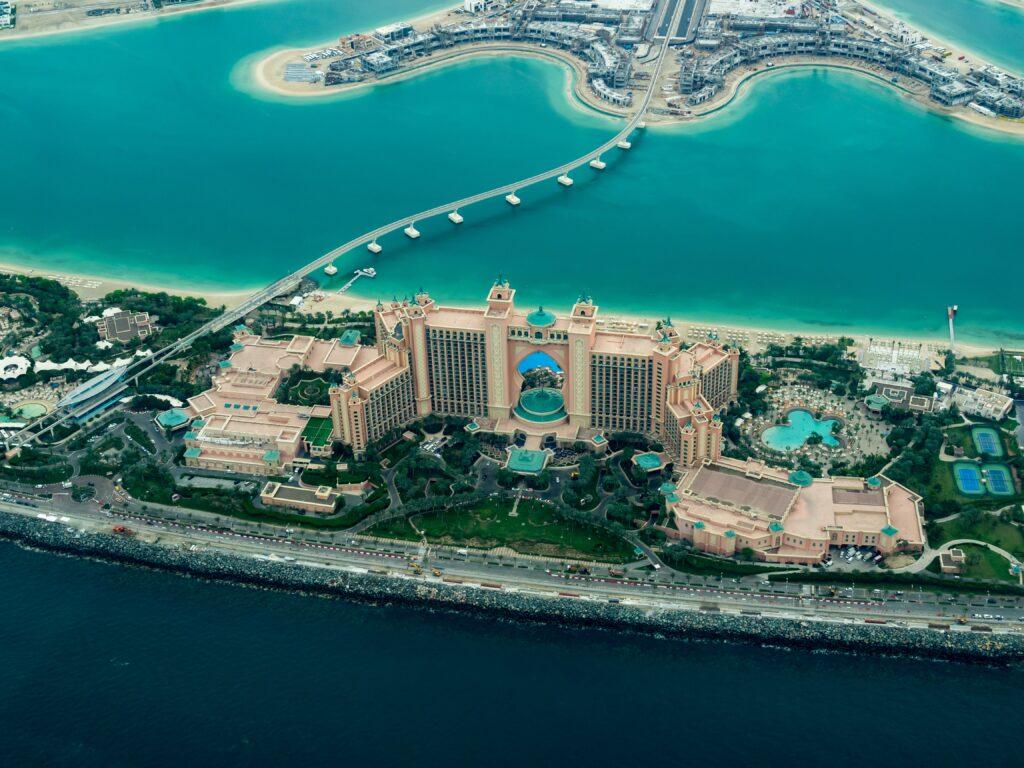
You will also know Dubai for its engineering marvels, including the world-renowned Burj Khalifa. Furthermore, it hosts several man-made islands such as the Palm Jumeirah.
The city also houses several state-of-the-art coworking spaces. Here can digital nomads connect and collaborate with each other.
The city offers a great infrastructure and a lot of convenience.
However, it’s definitely not the most affordable place to live. Although this also heavily depend on what kind of lifestyle you want to pursue.
Work With Me
You want to make sure Dubai tax residency is the right choice for you? Or, you don’t really know where to start?
Reach out if you want to know more about how to structure your tax setup!