
Montenegro tax residency is a topic I get questions about from time to time.
This is no surprise as Montenegro does offer stunning nature and a good quality of life.
Need help with your tax setup as a digital nomad? Reach out!
Overview of Tax Residency in Montenegro
- Personal income tax rates generally up to 15%, before municipal surtax
- Flat tax rate for investment income of 15%
- Social contributions depend on your employment status and contribution basis
- Corporate income tax ranging from 9% to 15%
- Tax residency can arise through your residence or centre of interests, or by spending more than 183 days in the country
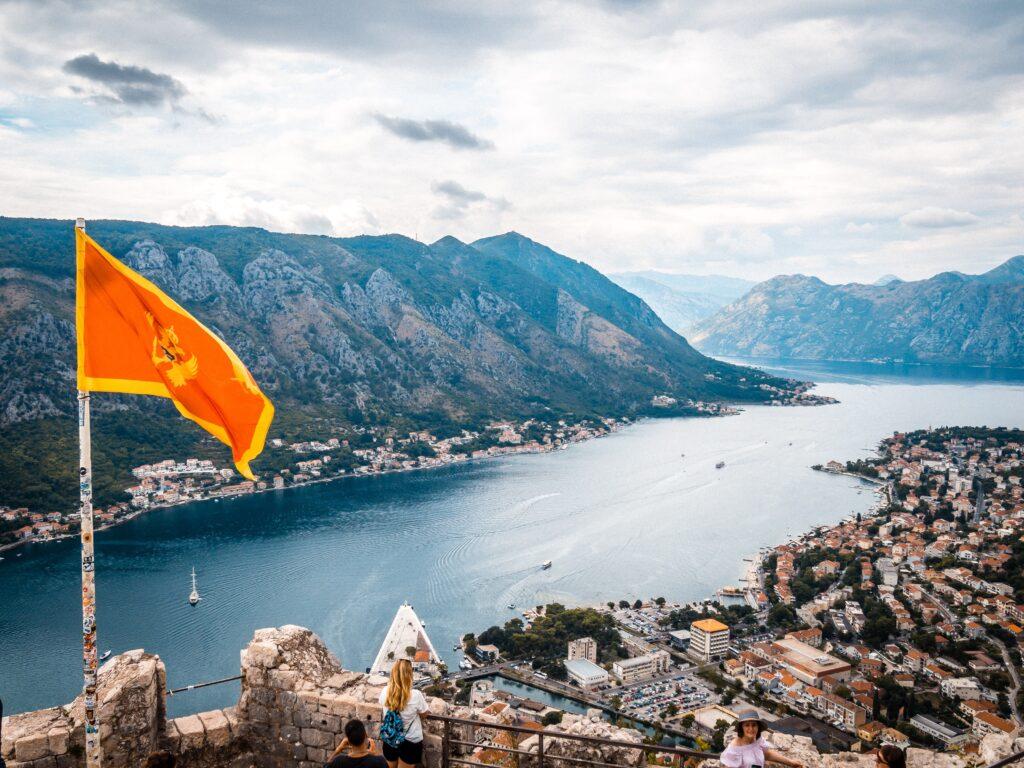
Taxes in Montenegro
Let’s now have a closer look at the different taxes you need to take into account if you get Montenegro tax residency.
Personal Income Tax
Montenegrin tax residents are generally subject to tax on worldwide income, with exemptions and treaty relief where applicable.
Montenegro applies three brackets for professional income:
- < EUR 8.400: tax-exempt threshold
- EUR 8.400 – 12.000: 9%
- > EUR 12.000: 15%
Investment income such as dividends, interest and capital gains is generally taxed at 15%, subject to applicable exemptions and treaty relief.
Municipal surtax can apply in addition to national income tax. The applicable rate depends on the municipality and the type of income.
Social Contributions
The social contributions you have to pay in Montenegro depend on your professional status.
If you work as an employee, social contributions are split between the employer and employee.
Employer:
- Pension & disability: 0%
- Unemployment insurance: 0,5%
- Other: 0,67%
Employee:
- Pension & disability: 10%
- Unemployment insurance: 0,5%
The maximum annual contribution basis is adjusted over time. Check the ceiling for the relevant tax year before calculating contributions on a higher salary.
For self-employed individuals the contributions are the following:
- Pension & disability: 10%
- Unemployment insurance: 1%
Yet, freelancers don’t pay the social contributions on their income or profit.
Nevertheless, the calculation takes into account your annual revenue.
- Revenue up to EUR 30.000: fixed lump sum payments
- Revenue up to EUR 60.000: pay contributions on 100% of the average gross salary
- Revenue above EUR 60.000: pay contributions on 150% of the average gross salary
The average gross salary used in this calculation changes each year. You therefore need the applicable annual figure to calculate your contributions.
For example, where the 150% contribution basis and combined 11% rate apply, the calculation is: applicable annual average gross salary × 150% × 11%. Confirm your classification and contribution basis with a local accountant before relying on an estimate.
Corporate Income Tax
As more and more bureaucracy is getting involved in operating a business in a personal name, Montenegrin taxpayers often decide to set up a company.
Corporate income tax is progressive, with the following marginal rates applying to the relevant profit bands:
- < EUR 100.000 of profit: 9%
- EUR 100.000 – 1.500.000: 12%
- > EUR 1.500.000: 15%
These tax rates are definitely some of the lower ones around Europe.
However, when working with a company, you should also think about the withholding tax. You pay withholding tax once you take out profit of the company as a dividend. The basic withholding tax rate is 15%.
Requirements for Obtaining Tax Residency
Under Montenegro’s personal income tax law, you can qualify as a tax resident by spending more than 183 days in the country during the tax year.
You can also qualify through your residence or centre of business and vital interests in Montenegro, even if you do not meet the day-count test. These are alternative criteria under Article 3 of the Personal Income Tax Law.
A residence permit gives you permission to live in the country. Tax residency is a separate assessment, and the tax office may ask for evidence of your stay, home and personal or business ties when you request a residency certificate.
There is no separate first-year rule in these statutory criteria that makes the day-count test mandatory for everyone. If another country also considers you tax resident, check the applicable tax treaty.
How to Get Tax Residency in Montenegro
Let’s now have a closer look at the different steps to get tax residency in Montenegro.
Get Residency Permit
The first step in the process is to get a residency permit so you can actually legally stay long-term in the country.
In this way, you can secure your stay there and make sure you can meet the requirements for tax residency.
Before applying, check which residence documents and tax registration documents the local authorities require for your situation.
Meet Requirements for Tax Residency
The next step to get Montenegro tax residency is to meet the requirements for tax residency.
You can either:
- Spend more than 183 days in Montenegro during the tax year; or
- Have your residence or centre of business and vital interests in Montenegro.
Keep records that support the criterion you rely on, such as travel dates, housing documents and evidence of your personal or business ties.
Tax Office Registration & Compliance
Now you can register with the Montenegrin tax authority by contacting the local tax office of the municipality you live in.
After registration, you are ready to file your tax returns in Montenegro.
You can also request a tax residency certificate where you meet the requirements. A certificate can support a claim for treaty relief, but does not automatically remove tax obligations in another country.
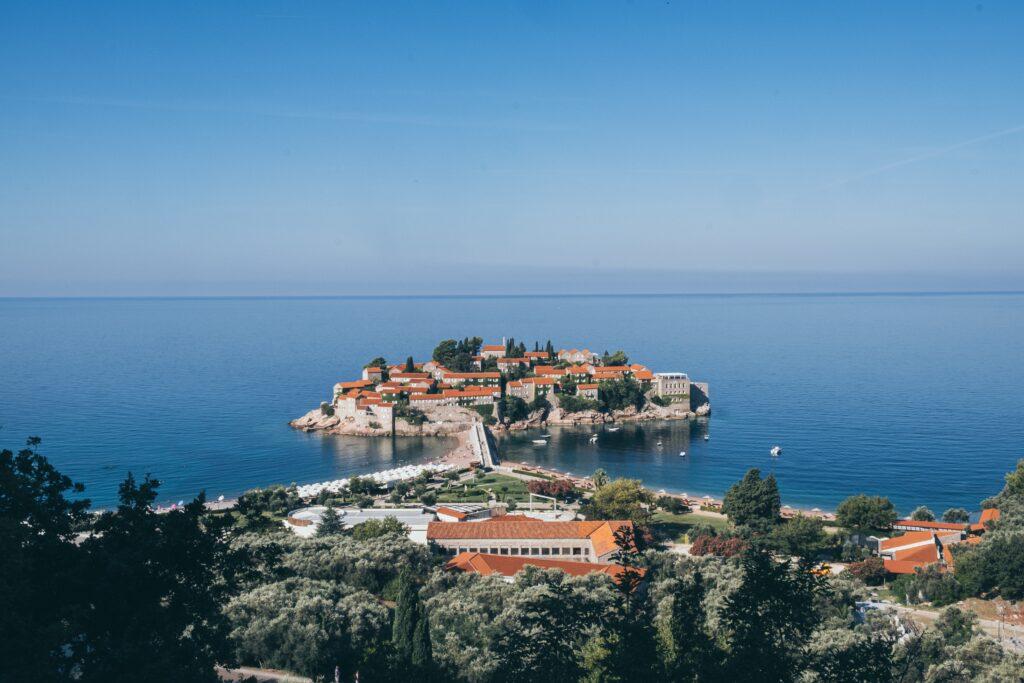
Tax Considerations about Montenegro for Digital Nomads
Setting up tax residency in Montenegro for digital nomads can work out if you pick the right setup.
It looks interesting from a tax point of view to register yourself as a freelancer in Montenegro.
Yet, many people still find the bureaucratic process and related administration challenging.
Furthermore, you will fairly quickly end up in the highest tax bracket of 15%.
Therefore, many people do actually opt to open a company.
Setting up a company can give access to Montenegro’s corporate tax rates, but you also need to account for tax on dividend distributions. For example, EUR 100 of profit taxed at 9% leaves EUR 91. A 15% dividend tax on that amount is EUR 13.65, giving a combined tax cost of 22.65%. This illustration excludes salary costs, social contributions, municipal surtax, treaty relief and other costs; your actual result depends on your setup.
Yet, the fact that Montenegro is not part of the European Union means that the financial infrastructure is often limited. This can be a burden if you operate internationally.
How is Montenegro for Digital Nomads?
- Cost of living: the cost of living in Montenegro is way lower than in many Western European countries.
- Nature: Montenegro is home to great mountains, cliffs and national park. Furthermore, it’s located at the beautiful Adriatic Coast.
- Stable internet: expect stable and speedy internet in cities. Yet, in remote mountain villages your connectivity might be a bit more limited.
- Community: growing digital nomad communities in Kotor Bay and Tivat.
- Digital nomad permit: Montenegro offers a residence route for qualifying digital nomads and remote workers. A personal income tax exemption may apply to qualifying foreign work income, subject to the conditions of the regime. The Montenegrin Investment Agency’s guide explains the route. Confirm your permit status, employer, income and current exemption requirements before relying on tax-free treatment.
Work With Me
As a digital nomad or remote worker, understanding your tax obligations across different countries is essential to stay compliant and optimize your finances.
I help remote professionals navigate tax residency rules, manage cross-border taxation, and structure their international tax affairs efficiently.
Contact me today to make your global lifestyle smoother and tax-smart.