Many people reach out to me to ask about the best low-tax countries to live in.
Over the years I have assisted hundreds of digital nomads and expats with to put together a plan for their residency and tax strategy. I used all of that experience to write this article about the best low-tax countries to live in and what elements to take into account. Many people focus too narrowly on income tax alone while you want to understand the overall picture.
Reach out if you need personalized assistance!
Best Low-Tax Countries to Live In
Let’s have a look at some of the best low-tax countries to live in.

Bulgaria
The first country on our list is a country in Eastern Europe: Bulgaria.
Advantages:
- Fixed 10% income tax rate both for individuals and companies; freelancers can lower this even to 7,5%
- Flexible to criteria to establish tax residency
- Low cost of living for Europe
- Big digital nomad community; especially in Bansko
- Part of the European Union and the Schengen Area
Disadvantages:
- Not so many digital nomads during autumn and spring
- Bureaucratic country where you will need the assistance of a local to get many things done
- Proposed increase of the dividend tax rate from 5% to 10%
Check out this article to learn more about tax residency in Bulgaria.
Cyprus
Another European country on the list is the island of Cyprus.
Advantages:
- Corporate tax rate of 15% (since 2026)
- Option to establish tax residency by staying 60 days on the island while meeting other requirements
- Part of the European Union
Disadvantages:
- Progressive personal income tax
- Smaller island that could get boring after a while
- Ongoing conflict with Northern Cyprus
You can learn everything about tax residency in Cyprus here.
Paraguay
Paraguay is an up-and-coming place for digital nomads to establish tax residency.
Advantages:
- Territorial tax regime
- Personal and corporate income tax rate of 10%
- Easy to obtain residency
- Flexible requirements for obtaining and maintaining tax residency
Disadvantages:
- Limited banking options
- Only few double tax treaties with other countries
- Not most connected country
- No big digital nomad scene (yet) and limited amount of things to do
Check out this article about tax residency in Paraguay to read all the details.

Thailand
Thailand has been a favorite amongst digital nomads for years.
However, what many people don’t know is that with the right setup the country also offers opportunities from a tax point of view.
Advantages:
- Income tax only due on income brought back into Thailand
- Destination Thailand Visa has low entry requirements and is perfect for digital nomads
- Low cost of living
- Welcoming and friendly locals
Disadvantages:
- You need to spend 182 days in the country for tax residency
- Limited banking options
In this article you can read more about how tax residency in Thailand works.
Turkey
Many nomads probably have had a layover at some point in Istanbul. Yet, more and more also take the time to explore the city and the wider country of Turkiye.
Advantages:
- Specific tax rule that allows you to exempt 80% of your income
- Low social contributions for freelancers
- Digital nomad visa
- Big country with different kinds of cultures and lifestyles
Disadvantages:
- High taxes if you don’t qualify for the 80%-rule
- Bureaucratic country where you need the assistance of a local to sort things out
Here you can read how to qualify for the tax benefits under tax residency in Turkey.
Best Countries with Zero Income Tax
If you don’t want to pay any tax at all, you can focus your search more on countries with zero income tax.
Yet, to be fair, only the first one has a big digital nomad community.
The other two are still feasible options but rather for digital nomads with a higher net worth.

United Arab Emirates
The UAE is the clear favorite in this list.
You can find a list of the advantages and disadvantages for the United Arab Emirates.
Advantages:
- No personal income tax
- Different visa schemes (e.g. digital nomad visa) you can qualify for
- Big expat and nomad community
- Good place to connect with other entrepreneurs
- Safe and stable country that is well connected with the rest of the world through airlines like Etihad and Emirates
- Variety of activities available for different budgets
Disadvantages:
- You need to stay 183 days in the country and meet other requirements in order to obtain an international tax certificate
- 9% corporate income tax
- Very hot summers
You can read this article if you want to learn more about tax residency in the UAE.
Monaco
The small city-state of Monaco lays on the Mediterranean coast surrounded by France.
Advantages:
- No personal income tax
- Safe and stable country
Disadvantages:
- Very high cost of living (e.g. minimum €5.000 for one bedroom apartment)
- High requirements for obtaining residency (€500.000 in a local bank) and become tax resident
- Rather small place that could get boring fairly quickly
- Limited amount of double tax treaties with other countries
- Not suitable for French citizens givem the specific tax rules that apply in this case
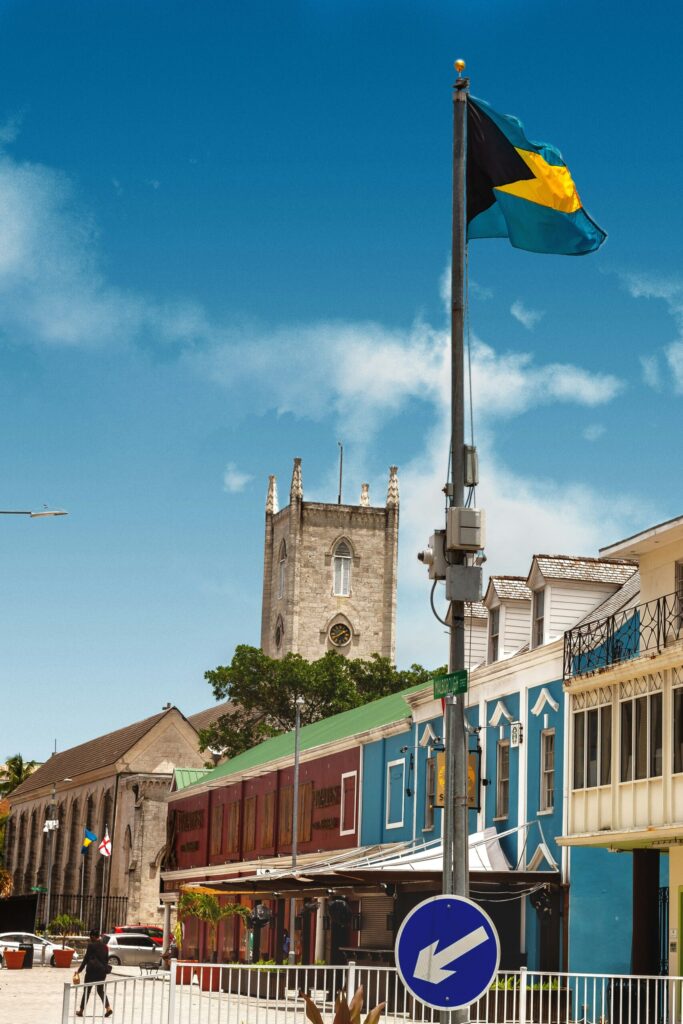
Bahamas
The Bahamas are a group of islands in the Atlantic Ocean in front of the coast of the US and Cuba.
Just like some of the other Caribbean islands, it offers a tax friendly environment.
Advantages:
- No personal income tax
- Safe and stable country
- English is the official language
- Year-round warm weather
Disadvantages:
- High cost of living because many of the supplies need to be imported to the islands
- Rather small country that could get boring fairly quickly
- Risks of hurricanes and impact of climate change
Key Elements You Should Consider that Determine Your Tax Outcome
If you plan to reduce your tax burden and keep more money for your own, you need to take into account multiple variables.
Too often clients reach out to me thinking they found the perfect solution with no or low income taxes. Yet, only to realize that if I give them the full picture they missed some important elements.
Therefore, for me a low tax country is a country where your overall tax burden including all different kind of taxes on your income is low.
Sole Focus on Personal Income Tax
The first mistake I often see is people focus only on the personal income tax rate without giving any attention to social contributions.
In most countries, you will also have to pay social contributions as a percentage of your professional income.
So, to get a good understanding of your take home pay you need to take both in consideration.
Not Considering Dividend Tax
A similar mistake happens when nomads look into setting up a company.
Their sole focus is the corporate income tax rate.
Nevertheless, in order to access and spend your money, you need to get it out of your company. When you take it out as a dividend, you’ll pay withholding or dividend tax.
Therefore, you need to add up the corporate tax and the dividend tax to get your actual total tax burden.
Wrong Understanding of Territorial Tax Systems
Many nomads read online about territorial tax systems and think it’s a simple solution for paying less or even no tax.
Territorial tax countries exempt foreign source income. Many people seem to think that as long as you work for foreign clients or they pay you from abroad, it’s sufficient to qualify.
However, just like with all other tax rules, each country has its own interpretation on what qualifies as foreign income.
In many cases, you’ll actually still have to pay tax on the income if you operate your business from within the country or work from there.
Now Knowing the Rules About Management & Control and Permanent Establishments
Opening a company in a low-tax country is one thing, avoiding taxes in other countries is another one.
If you open a company abroad but you consistently run it from another country that last country can still tax the profits of your company.
The reason for this are the international tax rules regarding management and control on the one hand or permanent establishments on the other hand.
On top of this, many countries started introducing all kinds of anti-abuse measures to still come after your offshore company if your sole reason is tax optimization.
Flexible Tax Residency Criteria
You also want to compare the criteria to obtain tax residency in the first place.
In many Western countries, just having sufficient ties (e.g. address, business registration, bank account) with the country can be enough to qualify as a tax resident. While many developing countries will rather focus solely on the amount of time you spend there.
Therefore, you might have to sacrifice a lot of your time and spend it in that country to benefit from its lower tax rates.
If you want to maintain maximum flexibility, you should consider having your tax residency in a country with flexible tax residency requirements.
Cost of Living
Finally, you also want to consider the change in your cost of living that comes with optimizing your taxes.
Everyone knows that Monaco is a tax haven. Yet, that doesn’t mean that it is a good choice for everyone. The reason: the increased cost of living will just make your tax savings disappear like melting snow.
Most nomads will be better off opting for a country with a lower cost of living while paying some taxes.
What Else to Consider When Choosing Where to Live
Many of us became a digital nomad in order to improve our lifestyle. Therefore, this is probably one of the most important elements to take into account when putting together your tax strategy.
Locking yourself up in a country for six months per year just because it has low taxes won’t be a sustainable long-term solution if you hate the place.
Accordingly, we always look for opportunities that align tax benefits with your lifestyle.
Moving Won’t Fix Your Taxes Unless Your Setup Is Right
If you want to improve your tax structure, you need to take into account your overall lifestyle and setup.
Just pulling one string, might not be sufficient to set you up for success. Even more so, it could only make things worse if it doesn’t fit in your overall plan.
Get in touch if you need advice specifically tailored to your situation!
FAQ on Choosing Low-Tax Countries to Live In
Let’s now have a look at some Frequently Asked Questions about choosing low-tax countries to live in.
What are the Trade-Offs of Living in Tax Havens?
There are multiple trade-offs of living in tax havens.
First, many of these countries will have a certain minimum physical presence requirement for tax residency. Therefore, you better like the place as you’ll have to spend significant time in the country.
Second, many tax havens often have some of the highest costs of living. This is simply because many wealthy individuals want to move there which drives up prices.
Do I Need Tax Residency to Benefit from Low-Tax Rules?
You don’t need tax residency to benefit from low-tax rules but it’s probably the best long-term solution.
As a digital nomad, it’s realistic that you live all over the place. Therefore, you might not really qualify as a tax resident of any of the countries you spend time in. Consequently, you could not have a tax residency anywhere.
Yet, this comes with some practical challenges regarding banking etc. Furthermore, you might get some questions down the line about the origin of your funds.
Therefore, if you want peace of mind, a long-term solution could be to just establish tax residency in a country with low or no taxes.
Is it Legal to Live in a Zero-Tax Country as an EU Citizen?
Yes, it is legal to live in a zero-tax country as an EU-citizen.
Nevertheless, you want to make sure that you follow all the rules when leaving your home country.
Moreover, you need to make sure that you also follow all the criteria of your country of destination to qualify as a tax resident there in order to stay out of the hands of the tax authorities of your home country.
Furthermore, some countries (e.g. Spain) have specific anti-abuse measures in place whereby they can still claim taxes from you for some years if you move your tax residency to a zero-tax country.